Fused Quartz vs Optical Grade B270 Glass
When selecting professional lens filters, the elemental substrate governs thermal expansion coefficients and surface planar accuracy. While crown glass such as Schott B270 maintains stellar optical index consistency, fused quartz delivers near-zero thermal expansion (0.54 × 10⁻⁶/K), ensuring that temperature swings between frozen dawns and searing midday desert heat do not cause microscopic warping across a wide 100mm filter plane.
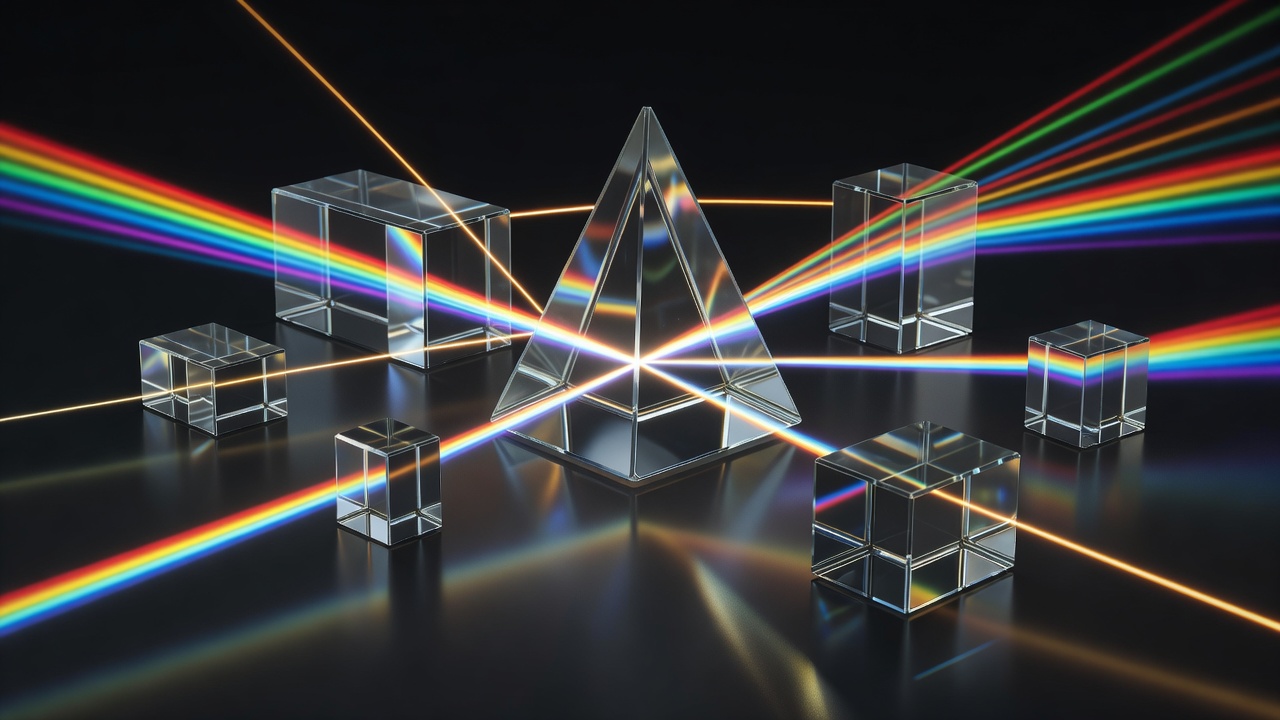
Optical Distortion & Sharpness Comparison Table
Below are our standardized test-bench evaluations using a 100-megapixel medium format digital back and a calibrated USAF 1951 optical resolution target at 70mm focal length.
| Filter Design Model | Substrate Core | Center Sharpness (lp/mm) | Corner Falloff | Measured ΔE Color Shift |
|---|---|---|---|---|
| Reference Sensor (Bare Glass) | Sensor Stack | 94.2 | 0.0% | 0.00 |
| Quartz Pro IRND 6-Stop | Fused Quartz | 93.8 | -0.4% | 0.14 |
| Schott Nano-HD ND 10-Stop | B270 Crown | 92.1 | -1.8% | 0.38 |
| Standard Resin Square ND | CR-39 Polymer | 76.4 | -14.2% | 3.82 |
| Circular Slim CPL (99.8%) | Optical Glass | 93.1 | -0.8% | 0.21 |
Multi-Coating Nanotech & Hydrophobic Repellency
In addition to spectral balance, outdoor landscape photographers encounter sea spray, mist, and fine grit. High-end filter sets incorporate oleophobic, anti-static, and scratch-resistant outer coatings. In our contact angle test, water droplets bead up with a contact angle exceeding 110 degrees, allowing quick clearing with a single puff of filtered air or a micro-fiber swipe.
16-Layer Double Nano Coating
Maintains flare reflection below 0.2% across incoming ray angles, eliminating ghosting when the sun enters the periphery of an ultrawide optic.
High-Rate Nitto Polarizer
Delivers 99.9% extinction ratio with minimal exposure loss (less than 1.1 EV penalty), preserving dynamic range in harsh reflections.